

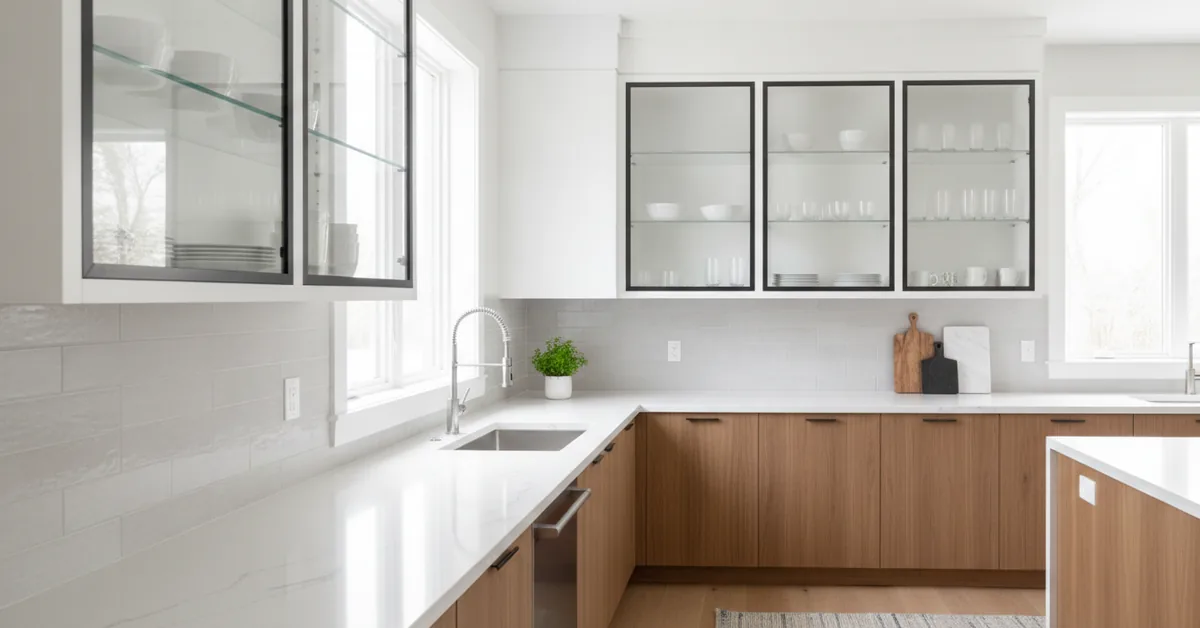
Last month, a client named Sarah walked into my shop holding a beautifully lit, custom walnut bar cabinet door, utterly devastated. She had commissioned another shop to build a display hutch with what she was told were high-end, lightweight acrylic shelves. Within six months of holding heavy crystal decanters, those shelves had developed a permanent, unsightly sag, and the surface looked like it had been cleaned with steel wool. This is the inconvenient truth of custom cabinetry: choosing between glass and acrylic is not just an aesthetic decision, but a structural engineering calculation. In my years at the workbench, I have seen too many homeowners make choices based on initial showroom gloss, only to regret the long-term maintenance and structural failures of the wrong material.
The Core Structural Realities of Shelf Material Selection
Deflection and Load Limits: Glass offers superior structural rigidity, maintaining flat planes under heavy loads where
- Deflection and Load Limits: Glass offers superior structural rigidity, maintaining flat planes under heavy loads where acrylic will bow permanently over time.
- Scratch Resistance and Longevity: Tempered glass resists daily micro-abrasions from ceramic and metal, while acrylic requires highly specialized cleaning to prevent immediate hazing.
- Weight and Installation Mechanics: Acrylic is half the weight of glass, making it safer for extra-wide spans or integrated lighting channels where cabinet carcass stress is a concern.
- Visual Clarity and Edge Profiles: Low-iron glass provides an ultra-clear, premium green-free edge, whereas acrylic offers superior light transmission but can yellow if exposed to direct UV rays over time.
Understanding the Physics of Cabinet Shelving: Deflection and Sag
When we design custom cabinetry, we calculate what we call the deflection limit. For a shelf to look straight to the human eye, it must not sag more than 1/32 of an inch per running foot. This is where the structural differences between glass and acrylic become critical. Glass is an amorphous solid with high compressive strength, meaning it does not creep or deform under continuous load. Acrylic, being a synthetic polymer, is subject to viscoelastic creep; under the constant weight of heavy stacks of dinnerware, it will slowly stretch and deform permanently, even if the initial load was within safe limits.
In my workshop, I advise clients that if their shelf span exceeds 30 inches and will hold heavy items like stoneware or cast-iron cookware, tempered glass is the only viable structural option. Acrylic can be used for wider spans only if we increase the thickness significantly or introduce a front-facing wood or metal nosing to reinforce the span, which often defeats the minimalist, floating aesthetic the client was looking for in the first place.
A Head-to-Head Technical Comparison
To help my clients visualize these trade-offs during design consultations, I put together this technical matrix based on real-world workshop testing and material data sheets. This table compares standard 3/8-inch (10mm) thick shelves across both materials.
| Performance Metric | Tempered Glass (3/8" / 10mm) | Cast Acrylic (3/8" / 10mm) |
|---|---|---|
| Weight per Square Foot | Approx. 5.0 lbs | Approx. 2.4 lbs | 32 to 36 inches (under moderate load) | 18 to 24 inches (under moderate load) |
| Scratch Resistance (Mohs Scale) | Approx. 5.5 to 6 (Highly resistant) | Approx. 3 to 4 (Prone to micro-scratches) |
| Impact Resistance | High (But will shatter if edge-impacted) | Extremely high (Virtually shatterproof) |
| UV Stability | Excellent (Will not degrade or discolor) | Moderate (Can yellow over years of direct sun) |
The Scratch Factor and Daily Maintenance Realities
In a busy kitchen, shelves are not static display pieces. Plates are slid in and out, wine glasses are shuffled, and dust is wiped away daily. This is where acrylic often breaks its promise of modern luxury. Acrylic is a soft material. Even wiping dust off an acrylic shelf with a dry paper towel can introduce micro-scratches that, over time, build up into a cloudy haze. If your kitchen features integrated LED strip lighting, those tiny scratches will catch the light and glow, highlighting every single imperfection.
Glass, specifically tempered silica glass, has a much harder surface. You can slide heavy ceramic bowls across it without leaving a trace. When I design high-use areas like wet bars or daily dish pantries, I always steer clients toward low-iron glass. Standard glass has a distinct green tint caused by iron oxide impurities. By specifying low-iron tempered glass (often sold under brand names like Starphire), we achieve the absolute optical clarity of acrylic without sacrificing the scratch resistance and structural integrity of real glass.
Where Acrylic Wins: The Case for Polymer Shelving
Despite my bias toward the longevity of glass, acrylic has a very specific, valuable place in high-end custom cabinetry. Its primary advantage is impact resistance and workability. If you live in an earthquake-prone zone, or if you are designing a low-level display cabinet in a home with active children, acrylic is virtually shatterproof. If a heavy bottle falls onto an acrylic shelf, the shelf will absorb the impact without breaking. If it falls on a glass shelf, even tempered glass can catastrophically shatter into thousands of tiny, safe, but incredibly messy pebbles.
Furthermore, acrylic is incredibly easy to customize on-site. If I need to cut a wire pass-through channel, notch a shelf around an internal cabinet pillar, or polish an edge to fit an out-of-square wall, I can do that in my shop or even on the job site with standard woodworking tools. Tempered glass, on the other hand, cannot be cut, drilled, or altered once it has been tempered. Every single dimension, shelf-pin notch, and wire-way must be calculated perfectly before the glass is sent to the tempering oven.
My Step-by-Step Guide to Specifying Shelf Materials
If you are currently planning a kitchen remodel or commissioning custom cabinets, do not leave the shelving specifications to chance. Follow this systematic approach to ensure your shelves look pristine and remain structurally sound for decades.
- Assess the Weight Profile: Weigh a typical stack of the plates or glassware you plan to store. If a single shelf will hold more than 15 pounds, eliminate acrylic unless you plan to use 1/2-inch thickness or add center support brackets.
- Measure the Span: For any open shelving or glass-front cabinet wider than 30 inches, default to tempered glass. If you must use acrylic for aesthetic reasons on a wide span, design a mid-shelf support or a structural wooden face-frame.
- Evaluate the Lighting Scheme: If your cabinets feature vertical LED channel lighting, specify low-iron glass. The light will pass through the edges beautifully without the green cast of standard glass or the scratch-revealing glow of acrylic.
- Verify the Edge Profile: Always specify a flat polished edge with a slight arris (eased edge) for both materials. This prevents sharp corners and reduces the risk of chipping during cleaning.
Frequently Asked Questions About Cabinet Shelving
- Can I mix glass and acrylic shelves in the same kitchen design?
- Yes, and I often recommend this. Use tempered glass for the upper display cabinets where heavy dishes, crystal, and integrated lighting are present. Use acrylic for lower, child-accessible cabinets, or inside deep pantry pull-outs where shatter resistance and lightweight operation are the primary concerns.
- How do I clean acrylic shelves without scratching them?
- Never use glass cleaners like Windex, paper towels, or dry microfiber cloths on acrylic. You must use a specialized plastic cleaner (such as Novus No. 1) and a clean, damp, high-pile microfiber cloth. Apply light pressure and wipe in a single direction rather than a circular motion to avoid grinding dust particles into the surface.
- Is tempered glass significantly more expensive than high-quality cast acrylic?
- Surprisingly, no. While raw acrylic sheets are cheaper than raw glass, the labor required to polish acrylic edges to a high-gloss, museum-quality finish often brings the final cost of custom-cut cast acrylic shelves very close to, or sometimes exceeding, the cost of custom-ordered tempered glass. The price gap only widens if you specify premium low-iron glass, which carries a 30% to 50% premium over standard clear glass.